Flexcar
- 3.6
- Rating
- 50.00K
- Installs
- Free
- Price

 Analysis by App-foxy
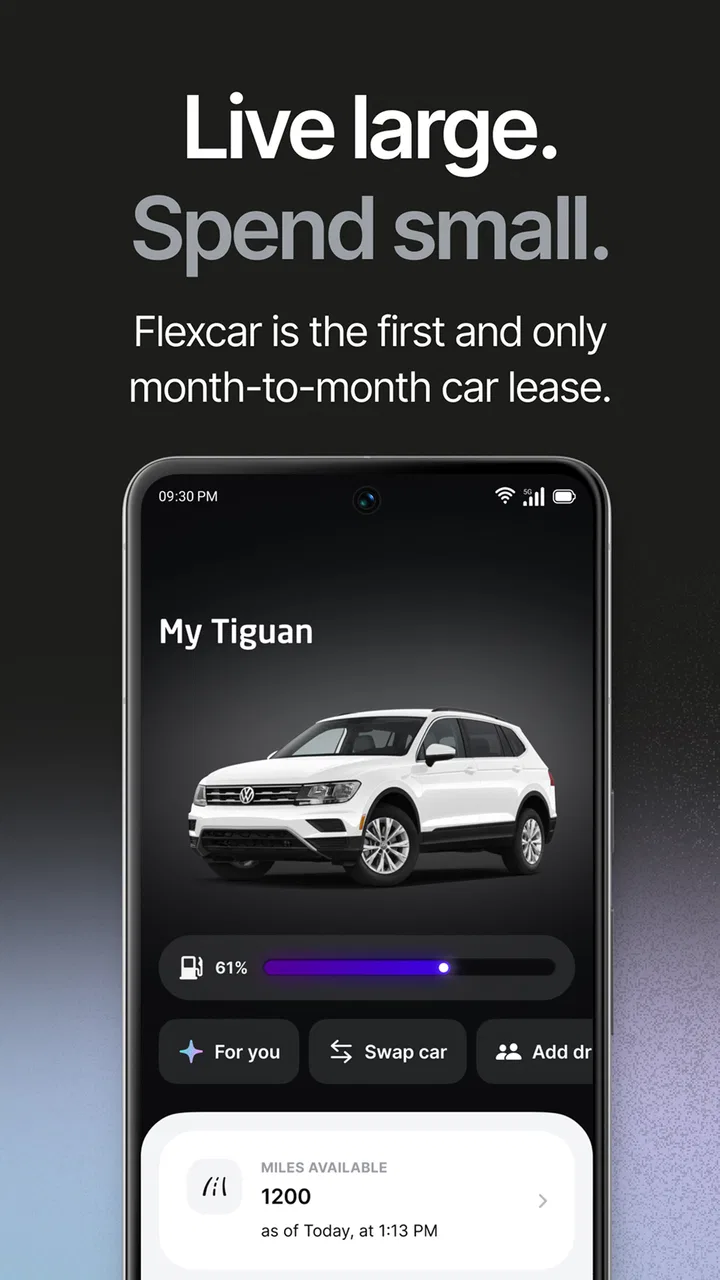
Flexcar is an Auto & Vehicles app from Flexcar, LLC that approaches car access differently from a conventional dealership visit or a long-term lease. I found its central idea easy to understand: instead of treating a vehicle commitment as something that must last for years, it presents a month-to-month leasing route through a mobile experience. That makes the app most interesting for people whose transport needs are real but not perfectly predictable.
The app is free, carries an Everyone age rating, and has passed the early-experiment stage with more than fifty thousand installs. Its average score is 3.7 from roughly five hundred ratings, which tells me to view it as a useful but not universally smooth experience. I would not install it expecting a polished replacement for every car-buying task. I would install it to explore a more flexible way of arranging access to a vehicle and to decide whether that flexibility fits my routine.
How I would use Flexcar from the first search to a repeatable routine
I’d make the first search a deliberate comparison rather than a hunt for the quickest yes: note what your weekly driving actually requires, then check whether the available option fits those needs and your uncertain timeline. Once the basics line up, I’d focus on the details that affect the decision—what the agreement asks of me and what I would do if my plans changed—before building a simple routine for reviewing the arrangement.
You May Also Like

 Google Keep - Notes and lists
Google Keep’s Quiet Growth Shows the Appeal of Simpler Notes
As mobile work gets busier, Google Keep keeps winning a simple contest: capture a thought quickly, find it later, and get on with the day.

 Blood Strike: 2.5 Anniversary
Blood Strike’s Loadouts Turn Every Drop Into a Tactical Gamble
A close look at Blood Strike’s custom loadouts: how fast access to signature weapons reshapes its battle royale rhythm, rewards preparation, and narrows the gap between fights.

 Pandora - Music & Podcasts
Pandora’s Music Is Easy to Start, but Harder to Recover
Pandora’s strength is its low-effort path from a seed to a station. Its weak spot is how much confidence it asks you to place in connection, setup, and quiet recovery.

 8 Ball Pool
 Is Built on Rivalries, Rematches, and Routine
A close look at the rivalries, rematches, shared routines, and unanswered safety questions that turn a quick pool match into a persistent mobile community.

 Samsung Music
’s Quiet Strength Is Playing What You Already Own
Its reach comes less from spectacle than from dependable access to a personal library. That simplicity is both the app’s strongest retention engine and its ceiling.

 AccuWeather: Weather Radar
AccuWeather Review: A Quick, Clear Forecast for Everyday Decisions
For everyday plans, the best forecast is the one you can understand quickly. AccuWeather makes rain timing, radar, and local conditions easy to act on, with a few trade-offs.
More From Our News Desk



Start with the real need, not the monthly idea
My first step would be to define why I need a car and how stable that need is. Someone starting a temporary job, waiting for another vehicle to be repaired, moving to a new area, or testing whether car ownership fits their budget may benefit from a month-to-month approach. Someone who already knows they will keep the same car for many years may find a traditional purchase or a longer lease easier to compare.
That distinction matters because flexibility has value only when I expect my circumstances to change. If I use a car every day for a long period, I would look beyond the attractive simplicity of the app and compare the complete commitment with financing, buying a used car, or arranging a standard lease. Flexcar is strongest when avoiding a long lock-in is more important than chasing the lowest possible long-term cost.
Inside the app, I would treat the vehicle search as the beginning of a decision rather than the decision itself. I would check what is available, consider whether the vehicle suits my normal passengers and cargo, and then think through how often I would drive. A car that looks suitable for commuting may be inconvenient for weekend equipment, child seats, or frequent highway trips. The app can make the process feel immediate, but my use case still deserves a slower check.
A practical everyday scenario
Imagine I have accepted a three-month work assignment in another part of town. Public transport covers some routes, but the schedule makes early shifts difficult. Buying a car would create a commitment that outlasts the assignment, while a conventional lease could be too rigid. In that situation, I would use Flexcar to investigate a month-to-month option, then compare the total monthly obligation with ride-hailing, short-term rental arrangements, and the cost of commuting without a vehicle.
The useful habit here is to calculate the whole routine before accepting anything. I would consider fuel, parking, insurance responsibilities, maintenance expectations, and the time saved each week. The app’s value is not simply that it puts cars on a phone screen; it is that it can support a decision where the length of the commitment is part of the problem.
I would also keep a written note of the vehicle I am considering, the questions I need answered, and the date on which I want to reassess the arrangement. That small habit prevents the convenience of browsing from turning into an impulsive choice. Month-to-month access can reduce commitment anxiety, but it does not remove the need to understand the agreement.
What the app changes compared with the usual alternatives
The usual alternatives each solve a different problem. Buying gives me control and may make sense when I plan to keep a vehicle for a long time. Financing spreads a purchase over time but creates an ongoing obligation. A standard lease can provide a newer car with predictable terms, yet it usually expects a longer commitment. Rental services are useful for very short periods, though they may be awkward when I need a car continuously.
Flexcar sits between those options. Its month-to-month positioning is the main reason I would consider it, especially when my timeline is uncertain. The trade-off is that flexibility should not automatically be confused with affordability. A flexible arrangement may cost more than owning a dependable used car over a long horizon, while still being less convenient than a rental for a single weekend. I would use the app to investigate the middle ground, not to assume it wins every comparison.
Settings and account details worth checking early
Experienced use begins with checking the practical details before I become attached to a particular vehicle. I would review the account information, contact details, notifications, and any preferences the app makes available. Accurate contact information is especially important in a service involving vehicle access and time-sensitive communication. I would also make sure notifications are not silently blocked, because a flexible arrangement is only useful if I notice updates promptly.
I would read every displayed term around the vehicle and the monthly arrangement rather than relying on the short summary. The important questions for me would be straightforward: what is included, what remains my responsibility, how does the month-to-month continuation work, and what steps are required if I decide to stop? If the app presents these details across several screens, I would take screenshots or notes for my own records, without assuming that a headline explains the full agreement.
Another worthwhile check is device compatibility. Flexcar supports Android devices running version 7.0 or later, so I would update an older compatible phone if possible and confirm that the app behaves reliably before I depend on it for a time-sensitive vehicle decision. The current version is 4.0.102, which suggests the product has continued to evolve, but an updated app is not a substitute for checking how it performs on my particular phone.
I would also keep the app updated through the normal store process. Updates can change navigation, wording, or the placement of account actions. When I am already using a vehicle arrangement, I prefer to open the app after an update and quickly confirm that I can still reach the relevant account and vehicle information. This is a simple repeatable habit, but it avoids discovering a changed workflow when I am in a hurry.
Faster patterns for people who use it repeatedly
My fastest workflow would separate exploration from administration. During the first session, I would browse deliberately and save notes about the vehicles and terms that matter. After choosing a direction, I would use later sessions for specific tasks only: checking the current arrangement, reviewing account messages, or preparing for a change. This avoids repeatedly starting from general browsing when I already know what I need.
I would also create a short personal checklist on my phone. It would include the vehicle I am considering, the intended start period, the expected length of use, the questions still unanswered, and the date for a cost review. That checklist is not a Flexcar feature; it is a way to prevent the app’s convenience from replacing my own planning. It is particularly useful for people comparing flexible access with a purchase or a conventional lease.
For a household, I would agree on one person responsible for checking the app and keeping the relevant details organized. Multiple people making separate assumptions about the same vehicle arrangement can create confusion, especially when one person expects the flexibility to work differently from another. A shared note with clear responsibilities is more reliable than relying on memory after a quick app session.
I would use a two-pass comparison method. In the first pass, I would ask whether the vehicle and commitment fit my life. In the second, I would compare the complete arrangement with the alternatives I could realistically obtain. This is more useful than comparing a single visible monthly figure with the purchase price of a car. The right comparison includes duration, convenience, risk, and the effort involved in leaving one option for another.
Where the flexible model has limits
The biggest limitation is that month-to-month access does not mean consequence-free access. I still need to understand the agreement, plan for regular vehicle expenses, and decide whether the arrangement remains sensible as my circumstances change. A flexible term can make starting easier, but it can also encourage me to postpone a more careful long-term comparison.
I would be cautious if I need a very specific vehicle configuration, guaranteed immediate availability, or a solution for a highly specialized driving job. The app may be a poor fit when my work depends on exact cargo capacity, unusual equipment, or a vehicle that must be available without substitution. In those cases, a direct purchase or a more specialized provider may offer clearer control.
I would also hesitate if my only goal is the lowest possible cost over several years. A month-to-month arrangement is designed around flexibility, and flexibility has a financial trade-off. For a driver with stable income, predictable location, and a clear long-term need, buying a reliable used vehicle may be the more rational route after accounting for ownership costs. Flexcar is better suited to uncertainty than to every form of car use.
The app’s 3.7 average from around five hundred ratings reinforces my balanced view. It has enough adoption to be worth investigating, but the score is not a reason to assume every user will have a frictionless experience. I would pay attention to how clearly the app explains each step and would contact support when a term affects my decision instead of guessing from a button label or a brief screen.
Questions I would settle before committing
Before proceeding, I would want a clear understanding of the payment structure and the responsibilities attached to the vehicle. I would review the agreement at the point where the app presents the actual commitment, not just the initial browsing information. If any wording affects cancellation, continuation, damage, mileage, insurance, or maintenance, I would resolve that question before treating the vehicle as mine to use.
I would also ask how the process works if my circumstances change during the month. The whole appeal is flexibility, so the practical exit or adjustment process matters as much as the starting process. I would look for the relevant account action in the app and keep a record of any confirmation. If the process requires contacting Flexcar, LLC, I would do that early rather than waiting until the end of a billing period or work assignment.
Another question is whether the available vehicle really matches my normal week. I would picture school runs, groceries, parking, commuting, and occasional long journeys rather than judging only by appearance. A vehicle that is acceptable for a short commute may become frustrating when used for a recurring family routine. The best use of the app is not merely finding something available; it is finding something appropriate.
Finally, I would decide what would make me leave the arrangement. A rising need for cargo space, a permanent move, lower-than-expected usage, or a better ownership option could all change the calculation. Setting that threshold in advance helps me use the month-to-month structure intentionally instead of drifting into repeated renewals without reviewing the choice.
My verdict after looking at the complete workflow
Flexcar is most compelling when flexibility is the feature I genuinely need. I like the idea of handling a car commitment through an app rather than beginning with a traditional long-term lease, and I can see real value for temporary workers, people between vehicles, and drivers whose next few months are uncertain. The free download and Everyone rating also make it easy to explore without turning the first step into a major decision.
My recommendation comes with a condition: use it as a comparison and management tool, not as a shortcut around careful reading. Check the vehicle against your actual routine, review the agreement, keep your own notes, and reassess the cost when your situation changes. Those habits make the flexible model more useful and reduce the chance that convenience hides an unsuitable commitment.
I would skip it if I already know I want to own one car for many years, need a highly specialized vehicle, or am looking only for the cheapest long-term transportation. I would choose a purchase, financing, a standard lease, or a short rental when one of those options matches my timeline better. But for someone asking, “How can I get dependable car access without immediately tying myself to a long contract?”, Flexcar deserves a careful look. It is a focused Auto & Vehicles app with a clear purpose, and its success for me would depend less on browsing quickly than on using its flexibility with a disciplined plan.
FAQs for Flexcar
01What is Flexcar and how does it work?
Flexcar is a car subscription service that offers a flexible, hassle-free alternative to traditional car ownership or leasing. Users can choose a vehicle, drive it for as long as they want, and return it when they're done. The subscription covers insurance, maintenance, and roadside assistance, providing a convenient all-in-one solution.
02What types of vehicles are available on Flexcar?
Flexcar provides a diverse range of vehicles to suit different needs and preferences. Options typically include sedans, SUVs, trucks, and luxury cars. The selection may vary based on location and availability, so it's best to check the app for the latest offerings tailored to your requirements.
03How does Flexcar's pricing structure work?
Flexcar offers a straightforward pricing model that includes a monthly subscription fee. This fee covers insurance, maintenance, and roadside assistance. Though it varies based on the vehicle type and duration of use, there are no hidden costs, making it easy to budget your transportation expenses.
04Is there a mileage limit with Flexcar subscriptions?
Flexcar subscriptions generally come with a mileage allowance, which varies depending on the specific plan. If you exceed the allotted miles, additional charges may apply. It's important to review the terms of your plan to understand the mileage limits and any potential excess fees.
05What should I do if the Flexcar needs maintenance or repairs?
If your Flexcar requires maintenance or repairs, the process is seamless. The subscription includes coverage for these services, and you can arrange them through the app or customer service. Flexcar partners with authorized service providers to ensure your vehicle is always in top condition.
Pros
- User-friendly interface for easy navigation.
- Flexible subscription plans available.
- No long-term commitment required.
- Includes insurance and maintenance costs.
- Wide selection of vehicles to choose from.
Cons
- Higher cost compared to traditional leasing.
- Limited availability in some regions.
- Mileage restrictions apply to all plans.
- App occasionally experiences slow load times.
- Customer support response times can vary.

Flexcar
Gallery